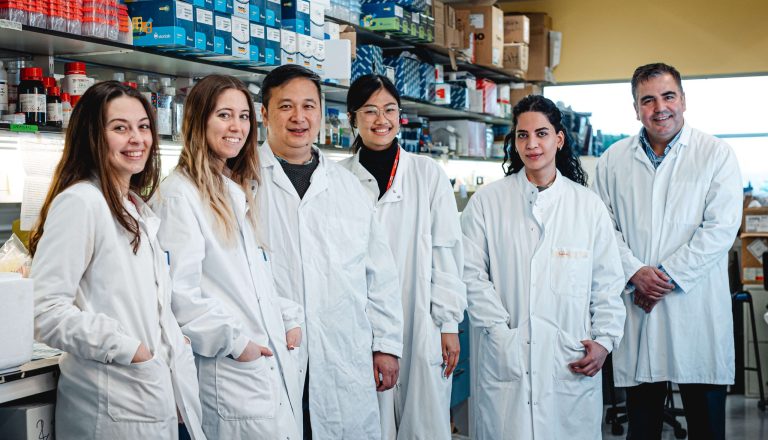
Programme grant (four years): Electric and magnetic fields and their impact on human health
Award amount: £1,322,309
Date of award: December 2004
We have been funding the team at Bristol for ten years now, in which time the link between electric and magnetic fields (such as those generated by high voltage power lines) and childhood leukaemia has become widely accepted.
In response to the growing body of evidence, agencies such as the UK’s Health Protection Agency, the International Agency for Research on Cancer (IARC) and US National Institute of Environmental Health Sciences have agreed that magnetic fields could cause cancer.
However, the mechanism by which magnetic fields act to cause leukaemia remains unclear. And until we understand more about this, it is impossible to determine how to protect people from the risks.
Professor Henshaw’s team is exploring possible mechanisms by examining the properties of electric and magnetic fields (EMF) and considering how these could impact on health.
A major part of the programme is devoted to the electrically charged ‘corona ions’ that are emitted by high voltage power lines.
The team has demonstrated how these corona ions can create tiny particles of air pollution, capable of penetrating deeply into the lung and passing into the blood stream.
Professor Henshaw explains more:
"The high voltage carried by power cables creates an intense electric field at the cable surface, ionising the air and creating electrically charged particles known as corona ions.
These ions are carried away from the power line by the wind. Within a minute or two they attach themselves to microscopic particles of air pollution, thereby placing an electric charge on these air pollution particles.
Such charged pollutants can be carried several hundred metres from powerlines. If they are inhaled they are more likely than normal particles of pollution to deposit in the lung."
With the support of CHILDREN with LEUKAEMIA we have developed sophisticated equipment for studying corona ions and charged air pollution particles in the field. This is enabling us to gather detailed information about the way in which children living near power lines may be exposed to more dangerous levels of air pollution by virtue of their proximity to the power lines.
The work of this team links for the first time two factors that have long been associated with childhood leukaemia – air pollution and EMF.
There is growing interest in air pollution as a possible factor in childhood leukaemia, especially from polycyclic aromatic hydrocarbons, or PAHs, found in vehicle exhausts which are known to have the potential to cause cancer.
The team has now extended their interest in childhood leukaemia and power lines beyond the electric field and corona ion effects to include magnetic field effects.
Professor Henshaw has collaborated with key laboratories overseas and has written and presented a paper “Do magnetic fields cause increased risk of childhood leukaemia via melatonin disruption?” with Professor Russel Reiter of the University of Texas.
This paper was published in Bioelectromagnetics (Henshaw and Reiter, Bioelectromagnetics Supplement 7, S86-S97) and was presented to a meeting of the World Health Organisation (WHO) EMF Project Workshop on Sensitivity of Children to EMF in 2004.
In April 2005 the evidence in the paper was presented to the National Radiological Protection Board’s Advisory Group on Non-Ionising Radiation sub-group on melatonin.
The group includes a number of PhD students who are carrying out specific projects looking in more detail at aspects of EMF.
For more information about the group’s work you can visit their website (you will be directed to an external site and a new window will open).
View a news report by RTE (wait for the less than 30 seconds for the ad to finish before the report starts). The report features Professor Henshaw and is about the controversy over the building of more powerlines in Ireland and the health risks to local communities.
Return to Current Prevention Projects